Best books on communication and writing
The most recommended books on communication, writing, and persuasion among people catalogued by Cabeceira, selected for how often they recur and for directly addressing the craft of expressing oneself clearly — writing, listening, persuading, and being understood — rather than merely mentioning communication in passing.
This list brings together the books on communication and writing that appear most often in the recommendations of people already catalogued by Cabeceira — writers, executives, persuasion researchers, and professionals who depend on expressing themselves well to do their jobs. It does not attempt to answer "what are the best books on language of all time": it answers a narrower, verifiable question — what people with traceable recommendations have actually read and recommended about writing, speaking, listening, and persuading.
The titles here cover very different angles of the same problem — the craft of creative and nonfiction writing, the psychology of persuasion and influence, the seldom-practiced art of genuinely listening, and everyday interpersonal communication — and so the list does not propose a single formula for "how to communicate better," but gathers works that, according to the recommendations catalogued by Cabeceira, have shaped how people from very different fields think about making themselves understood. The order combines the frequency of publishable recommendations in the collection with an editorial assessment of how directly each work addresses the craft of communication, rather than merely an adjacent subject.
This list began with books in Cabeceira's collection tagged with the "Communication & Writing" category — confirmed title by title on the public page for each included book. Within that universe, only titles with at least two publishable recommendations from distinct people were included, and the list excluded candidates whose central argument is not, in fact, about the craft of writing, speaking, listening, or persuading, even when they appeared in the same batch of data (one of them, a programming tutorial, clearly does not belong in this category despite appearing in the initial survey). When the same author had more than one eligible title, only the more recommended of the two was included, so that a single author would not occupy too many positions in a selection intended to represent different angles of communication. Each book's position combines that number of recommendations with an editorial assessment of how central the craft of communication is to the book's argument — frequency is the criterion for inclusion, not the sole rule for ranking. The list is revised whenever new relevant recommendations enter Cabeceira's collection; the date at the top of this page reflects the most recent editorial revision. One real limitation is that this list reflects only what Cabeceira has already catalogued at a given time, not a complete overview of the literature on language, rhetoric, or writing.
As an Amazon Associate I earn from qualifying purchases. Learn more..
- No. 1The War of ArtSteven Pressfield
Steven Pressfield names the force that sabotages anyone trying to create — Resistance — and offers a practical philosophy of professionalism and discipline to overcome it. It opens this list as the most recommended title in the collection among communication and writing books, serving as the reference text on the internal obstacle that precedes any act of writing or self-expression.
Recommended by Daniel Pink, Derek Sivers and 5 other people.
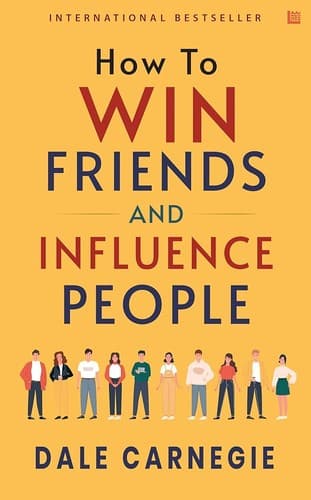
- No. 2How To Win Friends And Influence PeopleDale Carnegie
Published in 1936 and still widely recommended, Dale Carnegie condenses principles on genuinely listening, praising sincerely, and making other people feel valued in conversation. It makes this list as the collection's foundational classic on interpersonal communication, the starting point that many of the other titles in this selection, directly or indirectly, respond to.
Recommended by Alex Hormozi, André Valle and 5 other people.
- No. 3Bird by BirdAnne Lamott
Anne Lamott writes about the craft of writing not as a rare talent but as a daily practice made of bad drafts, insecurities, and honesty with one's own material. It is on this list for treating the writing process with a candor uncommon in writing manuals, useful both for those who write professionally and for those who simply want to express themselves more truthfully.
Recommended by Daniel Pink, Ramit Sethi and 3 other people.
- No. 4Pre-SuasionRobert Cialdini
Robert Cialdini argues that preparing the mental context of a listener, even before making a request, dramatically changes the odds of it being accepted. It makes this list as the collection's most recommended title on the mechanics of persuasion, complementing the more writing-focused books with a layer of strategic communication about timing and context.
Recommended by Alex Hormozi, Michael Mauboussin and one other person.
- No. 5You're Not ListeningKate Murphy
Kate Murphy investigates why genuine listening is an increasingly rare skill, and how recovering it improves personal and professional relationships as well as one's own ability to solve problems. It is on this list because most communication books deal with speaking or writing better; this is the only one in the selection devoted entirely to the receptive side of communication.
Recommended by Adam Grant and Daniel Pink.
- No. 6Nonviolent Communication - A Language of LifeMarshall B. Rosenberg
Marshall Rosenberg proposes a structured method — observation, feeling, need, request — for expressing one's needs and hearing others' without judgment or accusation. It makes this list for offering, unlike titles more focused on persuading or writing, a concrete and replicable technique for turning difficult conversations into mutual understanding.
Recommended by Esther Perel and Satya Nadella.
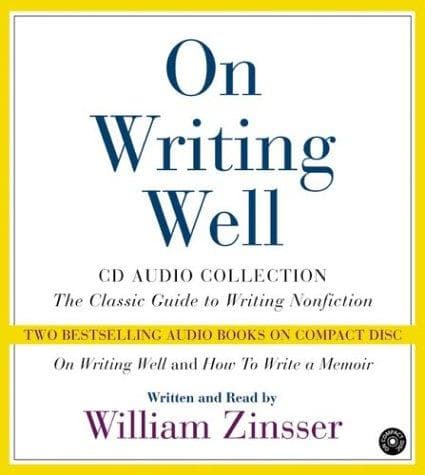
- No. 7On Writing Well CD Audio CollectionWilliam Zinsser
William Zinsser advocates simple, direct writing free of jargon as the standard to pursue in any kind of text, from journalism to business. It is on this list as the collection's most direct reference on clarity as the central value of good writing, a practical counterpoint to books more focused on the creative or emotional process of writing.
Recommended by Derek Sivers and Tim Ferriss.
- No. 8Draft No. 4John McPhee
John McPhee reflects on decades of journalistic craft, showing how to structure narratives, find one's own voice, and turn raw reporting into prose that holds the reader. It makes this list for addressing the structural side of nonfiction writing with a level of technical detail no other title in this selection matches.
Recommended by Jim Collins and Tim Ferriss.
- No. 9The Tipping PointMalcolm Gladwell
Malcolm Gladwell investigates how ideas, messages, and behaviors spread from small details of connectivity, message, and context until they become large-scale changes. It closes this list by shifting the focus from the individual who writes or speaks well to how a message actually spreads among people, an angle no other title in the selection covers directly.
Recommended by André Valle, Joe Rogan and one other person.
Each book's position reflects both how often a publishable recommendation recurs and Cabeceira's own editorial review, described in the methodology above — it is not an automatic scoreboard or an internet consensus. Use each book's links to check who recommends it and the original or secondary source behind each mention before deciding what to read.
Edited by Adam Reis, founder and editorial lead at Cabeceira. Revised Jul 2026. Found a problem, or think a book belongs on this list? Send an editorial suggestion.