Best psychology books
The psychology books — on cognition, decision-making, social behavior and human development — most recommended among people catalogued by Cabeceira, selected for recurrence and for directly addressing a finding or model from psychological science, not just generic self-help.
This list brings together psychology books in the strictest sense of the term: works whose central argument comes from research in cognition, decision-making, social behavior, positive psychology or clinical psychology — not just any book that mentions the word "mind" or "behavior" in passing. It starts from what is already catalogued by Cabeceira and from what real people, with traceable recommendations, have actually read and recommended, not from an academic canon defined a priori.
The titles here come from different traditions within psychology — logotherapy and existential psychology, cognitive psychology and judgment biases, the social psychology of persuasion, developmental psychology and mindset, positive psychology on happiness and purpose, Adlerian individual psychology, the neuroscience of behavior — and so the list does not champion a single school, but brings together works that, according to the recommendations catalogued by Cabeceira, have shaped how people from very different fields think about their own minds and those of others. The order combines the frequency of publishable recommendations in the collection with an editorial assessment of how much each work represents a specific and verifiable psychological idea, rather than just a generic observation about human behavior.
This list started from the books in Cabeceira's collection classified under the theme of psychology, and within that universe only titles whose central argument explicitly rests on psychological research or theory were considered — cognition and judgment biases, social psychology, positive psychology, developmental psychology or the neuroscience of behavior — rather than generic practical advice on productivity or career, which is the criterion for a sister list on personal development. Some books from the same data survey are eligible for both readings; in those cases, the book was placed only on the list whose framing its actual content most strongly supports, so that the two lists don't become mirrors of one another. Within the resulting subset, only titles with at least two publishable recommendations from distinct people in Cabeceira's collection were included. Each book's position combines this number of recommendations with an editorial assessment of how central and verifiable the psychological idea the book advances is — recommendation frequency is the entry signal, not the sole ranking rule. The list is revised whenever new relevant recommendations enter Cabeceira's collection; the date at the top of this page reflects the most recent editorial revision. One real limitation: this list reflects only what is already catalogued by Cabeceira at a given moment, not a complete overview of the psychology literature.
As an Amazon Associate I earn from qualifying purchases. Learn more..
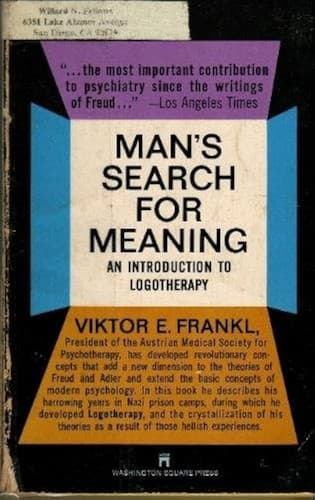
- No. 1Man's Search for MeaningViktor E. Frankl
Frankl wrote this account drawing on his own experience in Nazi concentration camps to support logotherapy, his thesis that the search for meaning — not pleasure, not power — is the central motivation of human life. It opens this list for being, by far, the title with the broadest and most diverse base of recommenders among the psychology books in the collection, including people who describe having reread or given it as a gift repeatedly throughout their lives.
Recommended by Daniel Pink, Esther Perel and 14 other people.
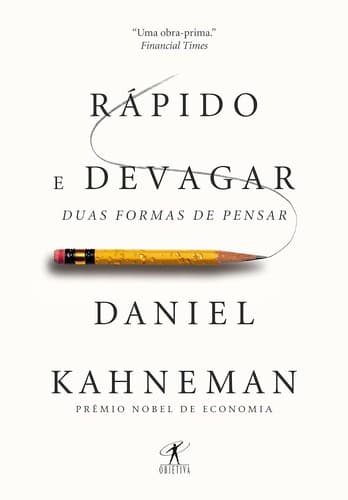
- No. 2Thinking, Fast and SlowDaniel Kahneman
Kahneman, a Nobel laureate in Economics, describes the two systems that govern human judgment — one automatic and fast, the other deliberate and slow — and catalogs the systematic errors we make when the first one takes control. It makes this list for being, among the books in the collection, the most direct reference on how the mind deceives itself, a theme that runs through nearly every other title in this selection without naming it with the same precision.
Recommended by Bill Gates, Derek Sivers and 8 other people.
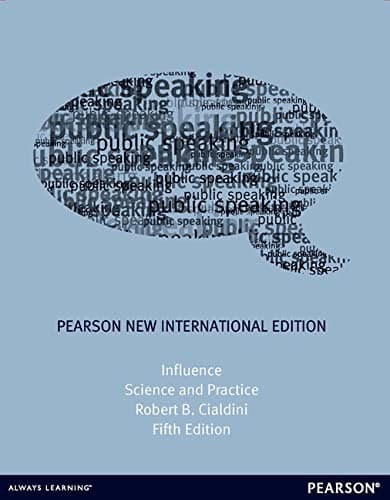
- No. 3Influence : Pearson New International EditionRobert Cialdini
Cialdini identifies six psychological principles — reciprocity, commitment, social proof, liking, authority, and scarcity — that explain why we agree to requests we would refuse upon closer examination. It's on this list for addressing a concrete, testable psychological problem, the mechanics of social influence, with a clarity that sets it apart from vaguer discussions of "how to convince people."
Recommended by Alex Hormozi, Charlie Munger and 5 other people.
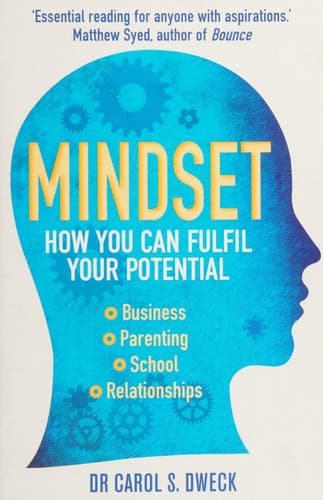
- No. 4MindsetCarol S. Dweck
Dweck documents decades of research showing that believing intelligence and ability can be developed — a growth mindset — changes how people respond to error and difficulty, as opposed to a fixed mindset. It makes this list because the distinction the book proposes has become common vocabulary among educators and leaders in the Cabeceira collection to explain why the same setback produces such different reactions in different people.
Recommended by Bill Gates, Mark Manson and 4 other people.
- No. 5Thinking in BetsAnnie Duke
Duke, a former professional poker player, proposes treating decisions as bets under uncertainty, separating the quality of a decision from the outcome it produced — a distinction known in the psychology of judgment as "resulting." It's on this list for directly addressing a specific and recurring bias, the tendency to judge decisions by their outcome rather than by the process, with practical tools to correct it.
Recommended by Eslen Delanogare, Howard Marks and 5 other people.
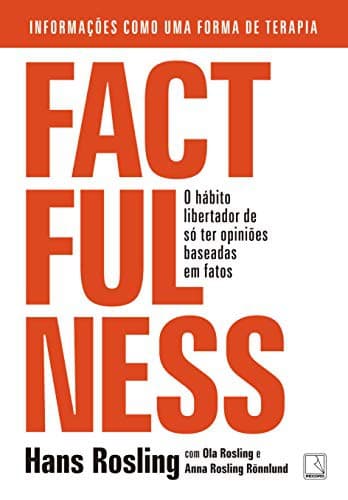
- No. 6FactfulnessHans Rosling
Rosling catalogs ten cognitive instincts — such as the destiny instinct or the urgency instinct — that systematically distort how we perceive the world, even among well-informed people. It makes this list for functioning as an applied inventory of perceptual biases, complementing Kahneman's more theoretical foundation with concrete examples of how these biases show up in judgments about health, poverty, and global progress.
Recommended by Barack Obama, Bill Gates and 4 other people.
- No. 7How to Change Your MindMichael Pollan
Pollan investigates the science behind psychedelic substances and what the resurgence of clinical research into them reveals about consciousness, ego, and the treatment of depression and anxiety. It's on this list for tackling, with journalistic rigor grounded in neuroscience, a territory of the psychology of consciousness that no other title in this selection covers directly.
Recommended by Michael Mauboussin, Naval Ravikant and 3 other people.
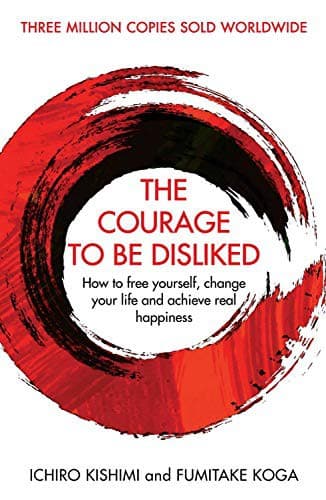
- No. 8The Courage To Be DislikedIchiro Kishimi
Written as a Socratic dialogue, the book translates Alfred Adler's individual psychology — the idea that much of human suffering comes from social comparison and the need for others' approval — into accessible language. It makes this list for explicitly representing a tradition of psychology less present in the collection than the cognitive or behavioral schools, thereby broadening the diversity of schools represented here.
Recommended by Ali Abdaal, Anthony Pompliano and 2 other people.
- No. 9BehaveRobert M. Sapolsky
Sapolsky, a neuroendocrinologist, examines human behavior — from aggression to cooperation — across timescales ranging from seconds before an act to millions of years of evolution. It's on this list because no other title in the selection treats the neurological and hormonal foundations of behavior with such scientific rigor, complementing titles more focused on cognition and judgment with an explicitly scientific layer.
Recommended by Eslen Delanogare, Marc Andreessen and 2 other people.
- No. 10Give and takeAdam Grant
Grant, an organizational psychologist, proposes a typology of givers, takers, and matchers to explain why some generous people fail while others become the most successful in their fields. It makes this list for bringing an organizational psychology lens rarely represented in other titles, treating reciprocity and generosity as measurable performance variables rather than merely moral virtues.
Recommended by Arianna Huffington, Changpeng Zhao and 7 other people.
- No. 11Stumbling on HappinessDaniel Todd Gilbert
Gilbert draws on research in cognitive and social psychology to show how the human mind is poor at predicting what will make it happy in the future — a phenomenon he calls inaccurate "affective forecasting." It closes this list by synthesizing, in accessible form, one of the most robust findings of contemporary positive psychology: that we are systematically poor at predicting our own emotional reactions, even to events we have experienced before.
Recommended by Derek Sivers, Maria Popova and 2 other people.


Each book's position reflects both how often a publishable recommendation recurs and Cabeceira's own editorial review, described in the methodology above — it is not an automatic scoreboard or an internet consensus. Use each book's links to check who recommends it and the original or secondary source behind each mention before deciding what to read.
Edited by Adam Reis, founder and editorial lead at Cabeceira. Revised Jul 2026. Found a problem, or think a book belongs on this list? Send an editorial suggestion.