Best personal development books
The most recommended personal development books — on habits, creative discipline, productivity, and skill acquisition — among the people cataloged by Cabeceira, selected for how often they are recommended and for offering a practical, applicable method rather than merely an idea about how the mind works.
This list brings together books that offer a practical method for changing how someone works, learns, or builds habits — not a theory of how the human mind works (that is the criterion for this Cabeceira's sister list on psychology), but a set of practices, routines, or behavioral changes that readers can actually apply. It draws on what is already cataloged by Cabeceira and on what real people with traceable recommendations have actually read and recommended, rather than on a generic list of "self-help books".
The titles here cover different areas within personal development — habit formation, discipline for creative work, redesigning one's relationship with time and work, deliberate skill acquisition, interpersonal communication, mental models for judgment, and resilience in the face of physical and mental hardship. Rather than promoting a single formula for success, the list brings together methods that people from very different fields have actually used, according to recommendations cataloged by Cabeceira. The order combines the frequency of publishable recommendations in the collection with an editorial assessment of how well each book offers a replicable method rather than merely generic motivation.
This list draws on books in Cabeceira's collection classified under personal development. Within that group, only titles whose central argument is a method, system, or practice applicable to one's own behavior, work, or learning were considered — not works that primarily present psychological research itself, a criterion reserved for this Cabeceira's sister list, "Best Psychology Books." Some books from the same dataset are eligible under both approaches; in those cases, each book was placed only on the list whose framing is more strongly supported by its actual content, and no title appears on both lists. Titles already central to another published Cabeceira list were also deliberately left out — "Principles," by Ray Dalio, already leads the list of best books for CEOs, while "On the Happy Life" and "Antifragile" already appear on the list of best philosophy books — because the survey contained enough candidates without repeating them. Within the resulting subset, only titles with at least two publishable recommendations from distinct people in Cabeceira's collection were included. Each book's position combines that number of recommendations with an editorial assessment of the concreteness and applicability of its proposed method — recommendation frequency is the threshold for inclusion, not the sole ranking rule. The list is revised whenever relevant new recommendations enter Cabeceira's collection; the date at the top of this page reflects the most recent editorial revision. One real limitation is that this list reflects only what Cabeceira has cataloged at a given time, not a complete overview of personal development literature.
As an Amazon Associate I earn from qualifying purchases. Learn more..
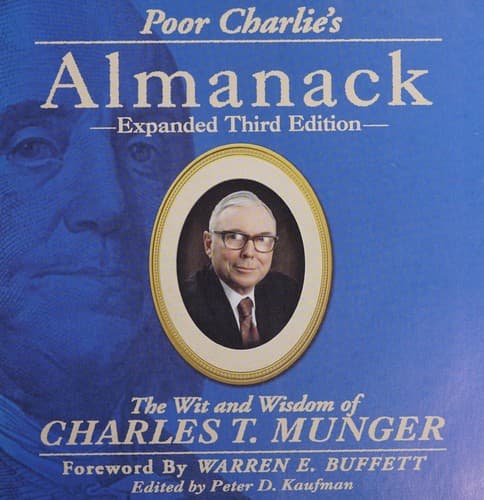
- No. 1Poor Charlie's almanackCharlie Munger
This collection brings together decades of Charlie Munger's speeches and interviews on how to build what he calls a "latticework of mental models" — a repertoire of concepts from different disciplines that helps avoid predictable errors in judgment. It opens this list because it has the broadest base of recommenders among the personal development books in the collection and because it proposes a concrete method — accumulating and cross-referencing mental models — rather than merely listing desirable virtues.
Recommended by Bill Gates, Daniel Ek and 9 other people.
- No. 2OutliersMalcolm Gladwell
Gladwell reconstructs the paths of extraordinarily successful people to argue that opportunity, historical context, and accumulated practice matter as much as individual talent. It is included in this list because its central thesis has a direct, recurring practical implication among the collection's recommenders: rather than waiting for innate talent, it is worth deliberately creating the conditions — mentorship, practice time, and context — that produce excellence.
Recommended by André Valle, Bill Gates and 7 other people.
- No. 3The War of ArtSteven Pressfield
Pressfield calls "Resistance" the internal force that sabotages any creative or disciplined work before it even begins, and proposes treating it as an enemy to be recognized and confronted every day, rather than defeated once and for all. It is on this list because it offers creators and entrepreneurs in the collection a practical, recurring vocabulary for framing procrastination as something to be managed through routine, not occasional willpower.
Recommended by Daniel Pink, Derek Sivers and 5 other people.
- No. 4Key Ideas from the 4-Hour Workweek by Tim FerrissTim Ferriss
Ferriss proposes deliberately reconsidering what is truly necessary at work — using principles such as the Pareto Principle and the automation of repetitive tasks — in order to redesign one's relationship with time and income. It is included in this list because it popularized, among a generation of entrepreneurs in the collection, the practical question "what would happen if I removed this?" — a simplification tool that appears in different forms elsewhere in this selection.
Recommended by Bruno Perini, Daniel Pink and 5 other people.
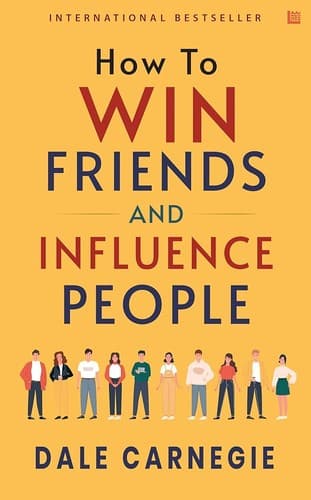
- No. 5How To Win Friends And Influence PeopleDale Carnegie
Written nearly a century ago, Dale Carnegie's book continues to be recommended for bringing together practical, testable principles of interpersonal communication — genuine interest in others, specific praise, and avoiding direct criticism — rather than vague advice about "being more sociable." It is on this list because few titles in the collection translate interpersonal skills into steps so directly applicable to a real conversation.
Recommended by Alex Hormozi, André Valle and 5 other people.
- No. 6Talent CodeDaniel Coyle
Coyle visits communities that produce elite performance at a disproportionate rate — from tennis schools to music studios — to identify a common pattern: deep, repeated practice, specific mentorship, and sustained motivation. It is included in this list because it turns the abstract question "how to develop talent" into a replicable method of deliberate practice, with concrete examples of what to do differently in the next training or study session.
Recommended by David Heinemeier Hansson, Jason Fried and 4 other people.
- No. 7The checklist manifestoAtul Gawande
Gawande, a surgeon, shows how simple checklists reduced serious errors in hospitals, aviation, and construction — not because professionals were incompetent, but because the complexity of modern work exceeds what human memory alone can handle. It is on this list because it proposes a concrete, low-cost tool against forgetting under pressure, applicable to any kind of complex work, not only to the examples in the book.
Recommended by André Valle, Bill Gates and 4 other people.
- No. 8Bird by BirdAnne Lamott
Anne Lamott teaches writing through the concept of "shitty first drafts" — the explicit permission to write badly in the first version so one can revise later — as an antidote to the perfectionism that paralyzes creators. It earns a place on this list because it offers those who write or produce any kind of creative work a concrete practice for overcoming paralysis caused by excessive self-demand.
Recommended by Daniel Pink, Ramit Sethi and 3 other people.
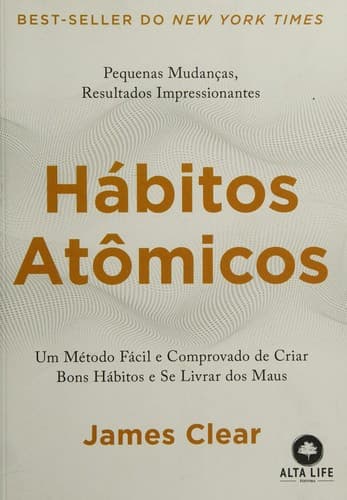
- No. 9Atomic HabitsJames Clear
James Clear breaks down habit formation into cue, craving, response, and reward, and argues that small 1% daily changes accumulate into disproportionate results over time. It is on this list because, among the titles in the collection, it is most often cited for its immediate applicability — reducing friction for a good habit and increasing friction for a bad one are actions readers can take on the very day they finish the book.
Recommended by Ali Abdaal, Anthony Pompliano and 2 other people.
- No. 10GritAngela Duckworth
Duckworth proposes that perseverance and sustained passion for a long-term goal — what she calls "grit" — predict success better than talent alone, and details practices for deliberately cultivating it. It earns a place on this list because it complements "The Talent Code" with a specific focus on sustaining effort over years, rather than solely on the quality of practice in a single session.
Recommended by Ali Abdaal, Tim Ferriss and 2 other people.
- No. 11Can't Hurt MeDavid Goggins
Goggins recounts his own transformation from being overweight and severely physically limited to becoming a U.S. Navy Special Forces operator, advocating what he calls the "40% rule" — the idea that, most of the time, the mind gives up long before the body does. It closes this list as the most extreme example of self-imposed discipline among the titles gathered here, a physical and visceral counterpoint to the more structured methods of the preceding books.
Recommended by Anthony Pompliano, Joe Rogan and 2 other people.

Each book's position reflects both how often a publishable recommendation recurs and Cabeceira's own editorial review, described in the methodology above — it is not an automatic scoreboard or an internet consensus. Use each book's links to check who recommends it and the original or secondary source behind each mention before deciding what to read.
Edited by Adam Reis, founder and editorial lead at Cabeceira. Revised Jul 2026. Found a problem, or think a book belongs on this list? Send an editorial suggestion.