Best leadership books
The books about the skill of leading people — responsibility, delegation, culture, and the exercise of power — most recommended by the people catalogued by Cabeceira, selected based on how often they are recommended and on their treatment of leadership as an everyday practice rather than a CEO role.
This list brings together books about the skill of leading — not about the role of CEO, which already has its own list here on Cabeceira. The distinction matters: running a company is a role involving decisions about capital, competitive strategy, and governance; leading is a skill that anyone responsible for other people needs to exercise, whether a submarine commander, a team manager, or a CEO who needs to give difficult feedback or take responsibility for a mistake that was not theirs alone. This list addresses the latter, not the former.
The titles here come from very different contexts — from the armed forces to Silicon Valley, from film studios to tech startups, from a Renaissance treatise on power to a manual on organizational culture — and what unites them is not the sector, but the fact that they deal directly with how a person exercises authority over others: taking responsibility instead of blaming circumstances, delegating instead of controlling, and communicating purpose instead of merely assigning tasks. The order combines the frequency of publishable recommendations in Cabeceira's collection with an editorial assessment of how specifically each book addresses the practice of leading people, rather than business strategy in a broader sense.
This list began with the subset of books in Cabeceira's collection classified under the leadership theme. Three titles from that survey were deliberately excluded because they already appear on Cabeceira's list of best books for CEOs, whose editorial rationale centers on the CEO role; including them here as well would require a genuinely distinct second rationale, and the survey had enough candidates without that repetition. Of the remaining subset, only titles with at least two publishable recommendations from distinct people were included, where the framing in the collection focuses on how a person leads others — responsibility, delegation, communicating purpose, and building culture — rather than on business strategy, finance, or founding companies in a broader sense, which are the focus of other lists on Cabeceira. Each book's position combines the number of eligible publishable recommendations with an editorial assessment of how specifically the book addresses the practice of leading people — recommendation frequency is the criterion for inclusion, not the sole rule for ranking, and the final order may therefore differ from a purely count-based ranking. The list is reviewed whenever new relevant recommendations enter Cabeceira's collection or when the CEO list changes and the boundary between the two lists needs to be reassessed; the date at the top of this page reflects the most recent editorial review. One real limitation is that this list reflects only what Cabeceira has catalogued at a given time, not a complete overview of the literature on leadership.
As an Amazon Associate I earn from qualifying purchases. Learn more..
- No. 1Extreme OwnershipJocko Willink
Willink turns his combat experience as a US Navy SEAL officer into the principle that a leader is always responsible for all of their team's results, without exception and without blaming subordinates, resources, or external circumstances. It opens this list for being, among the collection's titles on leading people, the one that gathers the most distinct recommenders, and for directly addressing the most basic and most frequently avoided posture of anyone in a leadership position: taking responsibility before assigning blame.
Recommended by Marc Andreessen, Michael Mauboussin and 2 other people.
- No. 2Turn the Ship Around!L. David Marquet
Marquet recounts how he transformed one of the worst-performing nuclear submarines in the US Navy by shifting decisions and authority to the sailors themselves, rather than concentrating all command in himself. It makes this list for being, among the titles in the collection, the most concrete and context-specific account of how to delegate real power — not just tasks — without losing control over the outcome, a central problem for anyone leading a team beyond their own individual capacity.
Recommended by David Heinemeier Hansson, Jason Fried and one other person.
- No. 3Start with WhySimon Sinek
Sinek argues that leaders and organizations that inspire in a lasting way start by communicating the "why" — the purpose behind the work — before the "what" or the "how," reversing the order in which most people present themselves and their work. It's on this list for directly addressing a part of leadership that the more operational titles in this selection don't cover: how to communicate purpose in a way that effectively mobilizes other people, not just how to execute a task well.
Recommended by Richard Branson and Tom Bilyeu.
- No. 4Ride of a LifetimeRobert Iger
Iger distills fifteen years at the helm of Disney — including the acquisitions of Pixar, Marvel and Lucasfilm — into a set of personal leadership principles, such as deliberate optimism, genuine curiosity and integrity in the small decisions of everyday work. It makes this list because, unlike an abstract manual, the book shows these principles being applied in real decisions about negotiation, culture and succession, serving as a practical counterpoint to the more conceptual titles in this selection.
Recommended by Bill Gates, Brene Brown and 3 other people.
- No. 5No Rules RulesReed Hastings
Hastings, co-founder of Netflix, describes how the company replaced traditional controls — vacation policy, expense approval, formal reviews — with a culture of high talent density, radical transparency and freedom combined with responsibility. It's on this list for addressing a specific leadership challenge at scale: how to sustain individual autonomy without losing organizational cohesion, which no other title in this selection covers with the same level of institutional detail.
Recommended by André Valle, Ben Horowitz and 3 other people.
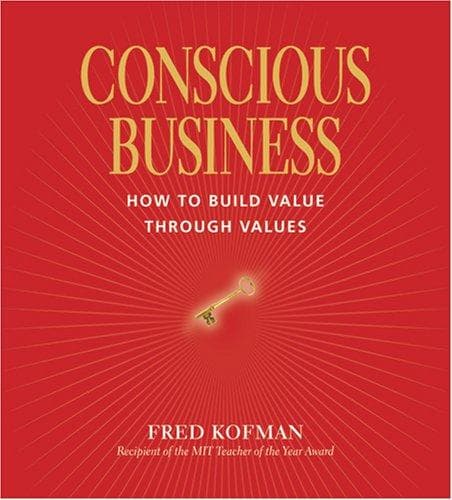
- No. 6Conscious BusinessFred Kofman
Kofman combines systems thinking, emotional intelligence and a distinction between a "victim" and a "protagonist" stance to propose how leaders can align personal integrity with organizational results. It makes this list for being the title most explicitly focused on the emotional and relational dimension of leadership — how a leader deals with their own reactivity before dealing with that of their team — a distinct angle from the books in this selection that are more centered on systems and processes.
Recommended by Reid Hoffman and Sheryl Sandberg.
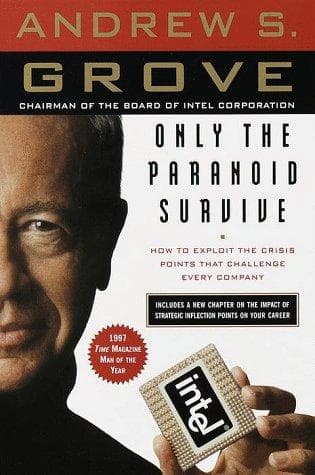
- No. 7Only the Paranoid SurviveAndrew S. Grove
Grove, then at the helm of Intel, describes "strategic inflection points" — moments when a fundamental market shift threatens a company's position — and the leader's role in recognizing these signs before they become too obvious to act on in time. It makes this list for addressing a leadership skill distinct from day-to-day management: deliberate vigilance for weak signals of change, and the courage to act on them before the rest of the organization agrees.
Recommended by Ben Horowitz, Bernardinho and 4 other people.
- No. 8The PrinceNiccolò Machiavelli
Machiavelli's treatise on how a ruler conquers and holds onto power — pragmatic to the point of provocation, willing to separate effectiveness from conventional virtue — continues to be read by people leading organizations as a raw study of the real mechanics of power, not of how it should ideally work. It's on this list as a historical and deliberately uncomfortable counterpoint to the contemporary "inspiring" leadership manuals in this selection, reminding readers that exercising authority involves hard choices that most management books prefer not to name.
Recommended by Garry Tan, Mário Sergio Cortella and 2 other people.
- No. 9The E-Myth RevisitedMichael E. Gerber
Gerber argues that most small businesses fail because their owners work "in" the business as technicians, rather than working "on" the business as leaders who build replicable systems and teams capable of operating without them. It makes this list for addressing a specific and recurring leadership trap among those who lead small teams: confusing being good at a task with being able to lead the people who perform it.
Recommended by Derek Sivers, Tim Ferriss and one other person.
- No. 10ReworkDavid “DHH” Heinemeier Hansson
Fried and Heinemeier Hansson argue that leading well doesn't require exhausting work hours or growth at any cost, proposing a deliberately calmer organizational culture, with fewer meetings and more realistic goals. It's on this list for representing a direct counterpoint to the leadership based on permanent urgency present in several other titles in this selection, arguing that sustaining a team for years requires pace, not just intensity.
Recommended by Jeff Bezos, Mark Cuban and 3 other people.
- No. 11Becoming Steve JobsBrent Schlender
Unlike more general biographies of Steve Jobs, this account focuses specifically on how he changed as a leader between his departure from Apple in 1985 and his return in 1997 — the years at NeXT and Pixar in which, according to the authors, he learned to listen, delegate and build teams before returning to lead the company he founded. It closes this list by treating leadership as a skill that develops over time and through failure, not as an innate trait, an argument that sums up the common thread among the earlier titles in this selection.
Recommended by Bill Gates, Jack Dorsey and 3 other people.


Each book's position reflects both how often a publishable recommendation recurs and Cabeceira's own editorial review, described in the methodology above — it is not an automatic scoreboard or an internet consensus. Use each book's links to check who recommends it and the original or secondary source behind each mention before deciding what to read.
Edited by Adam Reis, founder and editorial lead at Cabeceira. Revised Jul 2026. Found a problem, or think a book belongs on this list? Send an editorial suggestion.