Best entrepreneurship books
The books on creating, validating and scaling companies that appear most often among the recommendations catalogued by Cabeceira, selected by recurrence among publishable recommendations and by their relevance to anyone building a company from scratch.
This list brings together the books on creating and scaling companies that appear most often in the recommendations of founders and early-stage investors already catalogued by Cabeceira. It answers a different question from the one that guides the list of best books for CEOs: here the focus is not on running an already established company, but on validating an idea, finding the first customers and deciding how to grow without unlimited resources.
The books gathered here address entrepreneurship from distinct angles — contrarian thinking about what's worth building, creativity inside and outside organizations, the founder's personal productivity, accelerated growth versus lean operations, and real stories of people who built companies from scratch — and so they serve both those validating their first idea and those already running a growing company who need to decide on the next step. The order combines the frequency of publishable recommendations in the collection with an editorial assessment of how the books complement each other.
This list started from the books in Cabeceira's collection classified in the entrepreneurship category, or clearly centered on the creation, validation and early-stage growth of companies. Within that subset, only titles with at least two publishable recommendations from distinct people were included. Each book's position is determined first by the number of publishable recommendations it gathers in the collection; within the same tier of recurrence, the order follows an editorial assessment of the stage of the entrepreneurial journey for which the book is most useful, from the initial idea to growth at scale. The list is revised whenever new relevant recommendations enter Cabeceira's collection; the date at the top of this page reflects the most recent editorial revision. One real limitation: because it only gathers titles already catalogued by Cabeceira, this list does not automatically cover the entire universe of entrepreneurship reading that these people have publicly recommended elsewhere.
As an Amazon Associate I earn from qualifying purchases. Learn more..
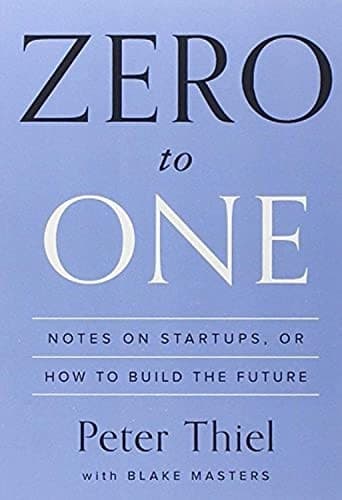
- No. 1Zero to OnePeter Thiel
Thiel argues that truly valuable businesses arise from ideas that don't yet have direct competition, not from competing better in an already contested market. It opens this list because it has the broadest base of distinct recommenders among the entrepreneurship books in the collection, and because it addresses the most fundamental decision any founder faces: what is worth building.
Recommended by Andrew Ng, Ben Horowitz and 6 other people.
- No. 2OriginalsAdam Grant
Grant investigates why some people manage to propose and sustain genuinely new ideas while others give up at the first sign of resistance. It is included in this list because it addresses a problem that precedes scaling a company: how to recognize and defend an original idea before it seems obvious to anyone else.
Recommended by Anthony Pompliano, Arianna Huffington and 6 other people.
- No. 3Key Ideas from the 4-Hour Workweek by Tim FerrissTim Ferriss
Ferriss questions the assumption that building a company requires trading all available time for operational work, proposing the elimination of low-value tasks before attempting to grow. It is included in this list because it addresses a recurring problem among early-stage founders: how to gain time and focus before they even have a large team.
Recommended by Bruno Perini, Daniel Pink and 5 other people.
- No. 4ReworkDavid “DHH” Heinemeier Hansson
Hansson and his co-author advocate operational simplicity — fewer meetings, less formal planning, leaner structures — as a deliberate alternative to growth at any cost. It is included in this list as a direct counterpoint to the accelerated-growth approaches of other titles in the selection, useful for founders deciding what kind of company they actually want to build.
Recommended by Jeff Bezos, Mark Cuban and 3 other people.
- No. 5Masters of ScaleReid Hoffman
Hoffman organizes conversations with founders who went through critical growth phases into a line of reasoning about how decisions change in nature as a company scales. It is included in this list because it specifically addresses the transition between validating an idea and turning it into a larger organization, with risks different from those of the early stage.
Recommended by Adam Grant, Bob Iger and 2 other people.
- No. 6Crossing the Chasm, 3rd EditionGeoffrey A. Moore
Moore describes the real gap between winning over the first enthusiastic customers and reaching the mainstream market, a problem many startups do not survive long enough to solve. It is included in this list because it precisely names one of the points at which promising projects most often stall, between initial validation and sustained growth.
Recommended by Andrew Ng, Changpeng Zhao and 2 other people.
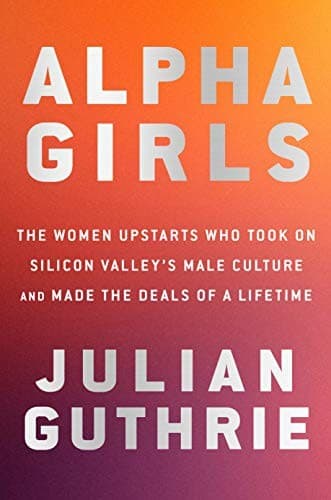
- No. 7Alpha GirlsJulian Guthrie
Guthrie documents the trajectory of women who built careers as founders and investors in Silicon Valley while facing barriers that rarely appear in conventional accounts of entrepreneurship. It is included in this list because it broadens the picture of who builds technology companies, directly addressing obstacles to access to capital and recognition that the other titles in the selection do not cover.
Recommended by Melinda Gates, Peter Diamandis and one other person.
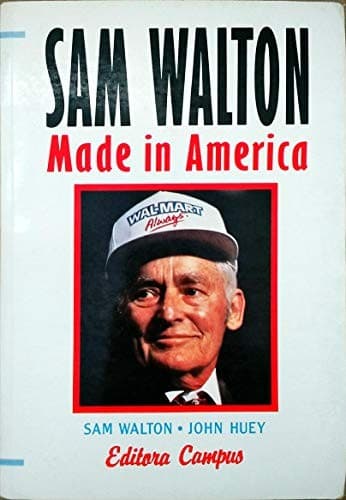
- No. 8Sam WaltonSam Walton
Walton narrates the building of Walmart starting from a single store in Arkansas, with attention to concrete operational decisions about customer focus and efficiency that many more theoretical entrepreneurship books don't detail. It's on this list as a first-hand account of scaling a business outside the technology world, broadening the thematic reach of the selection.
Recommended by Gary Keller, Jeff Bezos and one other person.
- No. 9Secrets of Sand Hill RoadScott Kupor
Kupor explains from the inside how venture capital funds make investment decisions, a side of the founder-investor relationship that most entrepreneurship books only touch on superficially. It's on this list for filling that practical gap: understanding the logic of those who fund a startup changes how a founder negotiates and plans fundraising.
Recommended by Eric Schmidt, Michael Mauboussin and one other person.
- No. 10The E-Myth RevisitedMichael E. Gerber
Gerber challenges the idea that technical competence alone is enough to sustain a business, arguing that lasting companies depend on replicable systems, not on the founder's constant presence. It closes this list with a practical reminder: the goal of entrepreneurship is not to create a job for oneself, but to build something that works beyond the founder.
Recommended by Derek Sivers, Tim Ferriss and one other person.
Each book's position reflects both how often a publishable recommendation recurs and Cabeceira's own editorial review, described in the methodology above — it is not an automatic scoreboard or an internet consensus. Use each book's links to check who recommends it and the original or secondary source behind each mention before deciding what to read.
Edited by Adam Reis, founder and editorial lead at Cabeceira. Revised Jul 2026. Found a problem, or think a book belongs on this list? Send an editorial suggestion.