Best books on spirituality
The books on spirituality, meaning and contemplative practice most recommended by the people catalogued by Cabeceira — from traditions as different as Stoicism, Christianity, Hinduism, Buddhism and secular spirituality — selected for how often they are recommended and for treating the search for meaning as a concrete practice, not as propaganda for a specific faith.
This list brings together the books on spirituality and contemplative life that appear most often in the recommendations of people already catalogued by Cabeceira — from technology founders to extreme athletes, as well as scientists. It does not represent any specific religious or philosophical tradition, and the inclusion of a book here should never be read as Cabeceira's endorsement of the doctrine, theology or practices that book describes: it is simply a record of what real people, with traceable recommendations, have read and recommended about meaning, contemplative practice and inner life.
That is why the titles here come from deliberately different backgrounds — a private diary by a Stoic Roman emperor, a sacred Christian text, an account of the life of a Hindu yogi master, a treatise by a Zen Buddhist master, a secular fable about listening to one's own heart — and the list does not try to reconcile them into a single system or rank which tradition is "right." The order combines the frequency of publishable recommendations in Cabeceira's collection with an editorial assessment of diversity of tradition, so that the selection is not dominated by a single line of spiritual thought.
This list was drawn from books in Cabeceira's collection classified in the "Spirituality & Meditation" category, including titles that overlap with philosophy, biography or fiction when the book's central argument is a spiritual practice or journey, rather than merely a passing mention of the subject. Within that subset, only titles with at least two publishable recommendations from distinct people catalogued by Cabeceira were included. Each book's position combines that number of recommendations with an editorial assessment focused on diversity of tradition — when the collection offered more than one strong title from the same line of thought (for example, more than one text rooted in Hinduism, or more than one Stoic text), the final order favored representing different traditions side by side rather than simply stacking the most recommended titles from a single line of thought. Including a book on this list is neutral with regard to doctrine: it does not claim, either explicitly or implicitly, that the teachings, practices or sacred texts described in any of these books are true, effective or superior to those of another tradition — the sole criterion for inclusion is the frequency of publishable recommendations within the collection already catalogued. The list is revised whenever new relevant recommendations enter Cabeceira's collection; the date at the top of this page reflects the most recent editorial revision. One real limitation is that this list reflects only what is already catalogued by Cabeceira at a given time, not a complete comparative overview of the world's spiritual traditions, and it does not replace religious, therapeutic or spiritual guidance from any qualified professional.
As an Amazon Associate I earn from qualifying purchases. Learn more..
- No. 1MeditationsMarcus Aurelius
Marcus Aurelius wrote these pages as a private diary, never intended for publication, recording an emperor's daily effort to live according to reason in the face of power, loss and his own mortality. It opens this list because it is, by a wide margin, the most recommended text in the collection among books on contemplative life, and because it serves as the most direct example of spirituality as a written practice of self-examination rather than an external belief system.
Recommended by Arianna Huffington, Jack Dorsey and 11 other people.
- No. 2Holy BibleDesconhecido
As the most recommended sacred text in Cabeceira's collection, the Bible appears in recommendations from people with very different backgrounds — from a former president to an astrophysicist, from a businessperson to an extreme endurance athlete. Its presence on this list reflects the volume and diversity of recommenders recorded in the collection, not Cabeceira's position on its religious truth; it appears alongside texts from other traditions precisely so that no single line of spiritual thought dominates this selection.
Recommended by Barack Obama, Jordan Peterson and 8 other people.
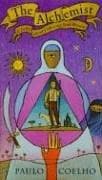
- No. 3The alchemistPaulo Coelho
Paulo Coelho builds a fable about a shepherd who crosses the desert in search of his own destiny, without tying its message to any specific religious tradition. It appears on this list as the deliberately secular counterpoint to the sacred texts in the selection: it speaks of purpose, inner listening and persistence in language accessible to any reader, regardless of faith.
Recommended by Brene Brown, Daniel Ek and 5 other people.
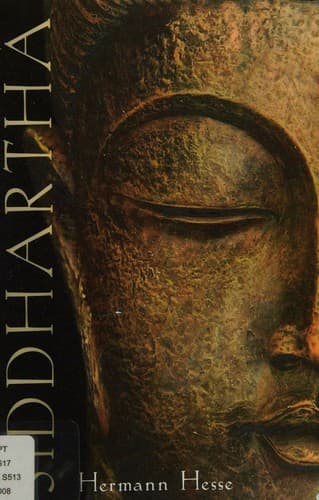
- No. 4SiddharthaHermann Hesse
Hermann Hesse follows the journey of a man who abandons material comfort — passing through asceticism, material pleasure and work — until concluding that wisdom cannot be transmitted by a teacher, only lived. It's on this list for offering a literary and fictional entry point into themes of Buddhist tradition, distinct from the direct teaching text of a Zen master found later in this same selection.
Recommended by James Clear, Lex Fridman and 4 other people.
- No. 5Guide to the Good LifeWilliam B. Irvine
William Irvine translates ancient Stoic practice — already present on this list through Marcus Aurelius's diary — into exercises applicable to the daily lives of those seeking to reduce unnecessary suffering and cultivate gratitude in the face of what cannot be controlled. It is included on this list as the practical complement to "Meditations": where Marcus Aurelius's text is the original source, this is the contemporary manual for turning that same tradition into a daily spiritual routine.
Recommended by David Heinemeier Hansson, Derek Sivers and 3 other people.
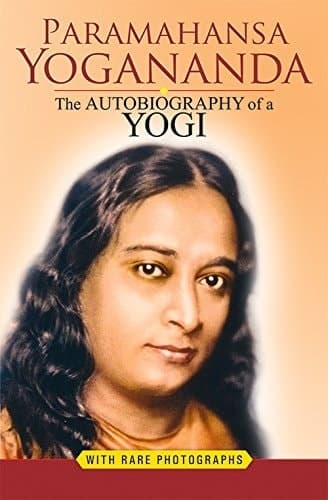
- No. 6Autobiography of a YogiParamahansa Yogananda
Paramahansa Yogananda narrates his own journey, from childhood in India to the decision to bring yogic teachings to the West, including encounters with other spiritual figures and explanations of meditation and consciousness. It's on this list for being a first-person account of a life entirely devoted to yogic practice, representing the Hindu tradition in a lived, biographical way rather than merely a doctrinal one.
Recommended by Jay Shetty, Marc Benioff and 2 other people.
- No. 7The Bhagavad GitaDesconhecido
Structured as a dialogue between Prince Arjuna and the god Krishna on the eve of a battle, this Hindu sacred text deals with duty, action detached from its results, and devotion. It's on this list alongside the Bible and Yogananda's autobiography as a third distinct tradition, upholding this selection's commitment to not letting any one spiritual tradition speak alone for the theme.
Recommended by Mahatma Gandhi, Naval Ravikant and 2 other people.
- No. 8Zen and the Art of Motorcycle MaintenanceRobert M. Pirsig
Robert Pirsig combines the account of a motorcycle trip with his son with a philosophical investigation into what "quality" means and how to reconcile reason and intuition, technique and spirit. It's on this list for representing a secular, philosophical path of Zen inspiration — without formal religious doctrine — that treats attention to everyday life, even mechanical tasks, as a spiritual practice in itself.
Recommended by Drew Houston, Jordan Peterson and 2 other people.
- No. 9Untethered SoulMichael A. Singer
Michael Singer proposes that much of human suffering comes from automatic identification with one's own mental voice, and describes a path of liberation that does not depend on any specific religious tradition. It's on this list as the most direct example of explicitly secular, non-dual spirituality in the selection, useful specifically for those seeking contemplative practice outside any organized faith structure.
Recommended by Deepak Chopra, Naval Ravikant and 2 other people.
- No. 10Zen Mind, Beginner's MindShunryu Suzuki
Shunryu Suzuki, a Zen Buddhist master, teaches that the beginner's mind — open, free of fixed assumptions — is what sustains genuine contemplative practice, even after years of experience. It closes this list by bringing, unlike the fictional retelling in "Siddhartha," the direct teaching of a practitioner from within the Buddhist tradition itself, closing the arc of voices from inside and outside each spiritual tradition that this selection brings together.
Recommended by Garry Tan, Marc Benioff and one other person.
Each book's position reflects both how often a publishable recommendation recurs and Cabeceira's own editorial review, described in the methodology above — it is not an automatic scoreboard or an internet consensus. Use each book's links to check who recommends it and the original or secondary source behind each mention before deciding what to read.
Edited by Adam Reis, founder and editorial lead at Cabeceira. Revised Jul 2026. Found a problem, or think a book belongs on this list? Send an editorial suggestion.