Best fiction books
The novels, novellas and short stories that appear most often among the recommendations catalogued by Cabeceira, selected based on their recurrence among publishable recommendations and an editorial assessment of the diversity of traditions, eras and genres they bring together.
This list brings together the novels, novellas and short stories that appear most often in recommendations from people already catalogued by Cabeceira — from technology company founders to television hosts, as well as athletes, writers and heads of state. It does not attempt to define a universal canon of world fiction: it draws only on what is already in Cabeceira's collection and on what real people with traceable recommendations have actually read and recommended.
The titles gathered here span different traditions, eras and continents — from the 19th-century Russian social novel to Latin American magical realism, from the English political fable to contemporary American fiction about racial justice — reflecting less an editorial plan for artificial diversity than what actually recurs among publishable recommendations catalogued by Cabeceira. This list deals specifically with narrative fiction — novels, novellas and short stories; works that are clearly science fiction within the same survey, with their own universe of readers and themes, are reserved for the dedicated list of best science fiction books, so they do not compete for space with the other genres represented here.
This list started from the fiction titles in Cabeceira's collection — novels, novellas, and short stories, excluding non-fiction works even when classified under adjacent labels like spirituality — with one deliberate exception: titles clearly belonging to science fiction within this same survey, such as The Hitchhiker's Guide to the Galaxy, were intentionally left out of this list and reserved for the dedicated best science fiction books list, so that a genre already well served by its own list wouldn't take up positions here meant for the novel, the classic, political dystopia, and magical realism. Within this subset, only titles with at least two publishable recommendations from distinct people were included; when the same author had more than one eligible title — the case of Ayn Rand, with Atlas Shrugged and The Fountainhead — only the more recommended of the two made the list, so that a single author wouldn't occupy more than one position in a selection meant to represent different literary traditions. Each book's position is determined first by the number of publishable recommendations it gathers in the collection; within the same tier of recurrence, the order follows an editorial reading of how the books alternate in tone, era, and tradition throughout the list. The list is revised whenever new relevant recommendations enter Cabeceira's collection; the date at the top of this page reflects the most recent editorial revision. A real limitation: this list reflects only what Cabeceira has already catalogued at a given moment, not a complete overview of world literature nor of the fiction readings these people have publicly recommended elsewhere.
As an Amazon Associate I earn from qualifying purchases. Learn more..
- No. 1Atlas ShruggedAyn Rand
Before being a philosophical treatise, this is a novel built around a mystery — who is John Galt? — that unfolds across more than a thousand pages in a collapsing industrial America, with characters, conspiracies, and a deliberately novelistic plot. It opens this fiction list for being, among the clearly narrative works in Cabeceira's collection, the one that gathers the widest base of distinct recommenders, which supports its position as the entry point to this selection.
Recommended by Elon Musk, Mark Cuban and 6 other people.
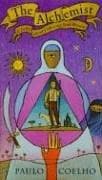
- No. 2The alchemistPaulo Coelho
Coelho tells the journey of the shepherd Santiago through the Sahara desert in pursuit of a recurring dream, building a short fable about inner listening and persistence that became one of the most widely read Brazilian books in the world. It's on this list for being, among the fiction titles in the collection, one of those that gathers recommenders from the most disparate fields, a sign of an appeal that crosses very different professional niches.
Recommended by Brene Brown, Daniel Ek and 5 other people.
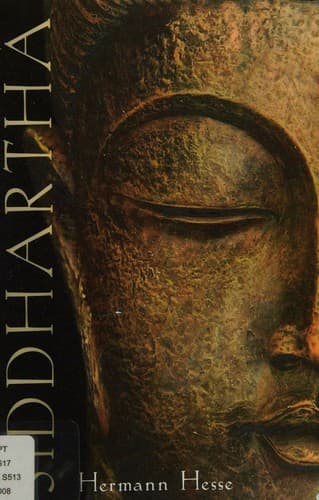
- No. 3SiddharthaHermann Hesse
Hesse follows Siddhartha's search for meaning through asceticism, material pleasure, and ordinary work, in a short narrative that ends where most coming-of-age novels are just beginning. It's on this list for functioning, in practice, as fiction that reads like a spiritual essay — one of the reasons it appears so often alongside non-fiction books in the recommendations catalogued by Cabeceira, without ever ceasing to be, structurally, a novel.
Recommended by James Clear, Lex Fridman and 4 other people.
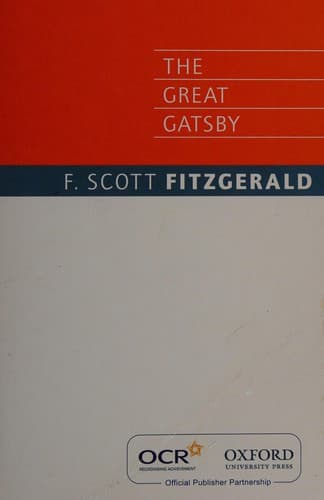
- No. 4Great Gatsby - the Great American Historical Romance NovelF. Scott Fitzgerald
Fitzgerald uses the rise and fall of Jay Gatsby in 1920s New York to expose the emptiness beneath the glow of the American dream, in a short novel that Nick Carraway narrates without ever ceasing to be complicit in the very story he judges. It's on this list as one of the most recurring American classics in the collection, condensing into little more than 150 pages a social critique still quoted decades after it was written.
Recommended by Bill Gates, Daniel Pink and 4 other people.
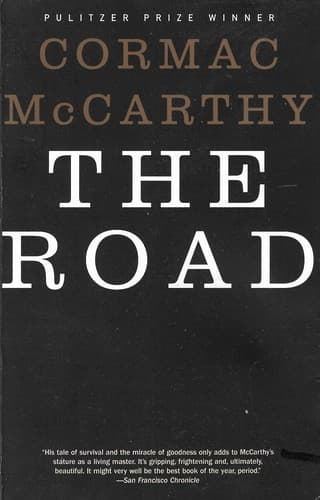
- No. 5The RoadCormac McCarthy
McCarthy strips the narrative down to the essentials — a father, a son, a road, a world in ashes — to ask what's still worth preserving when almost everything has been destroyed. It's on this list as the darkest title in the selection, a necessary counterpoint to the more optimistic novels gathered here, treating fatherhood and survival without any consoling gloss.
Recommended by Jocko Willink, Lex Fridman and 2 other people.
- No. 6Ana KareninaLeo Tolstoy
Tolstoy intertwines Anna's trajectory, as she breaks with the social conventions of her marriage, with the quieter search for meaning of the farmer Levin, building a novel that is at once a social epic and an intimate psychological study. It's on this list for representing, among the classics in the collection, one of the most complete readings on the distance between social convention and personal desire.
Recommended by Jordan Peterson, Oprah Winfrey and 3 other people.
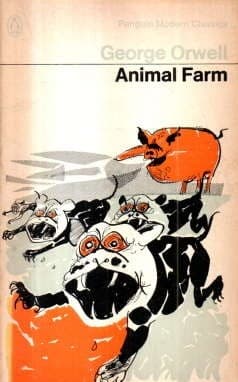
- No. 7Animal FarmGeorge Orwell
Orwell uses a farm and its animals to dramatize how genuine revolutionary ideals can be corrupted until they become the very tyranny they meant to replace, in a text short enough to be read in an afternoon and dense enough to reward rereading. It's on this list as the title that most directly represents the tradition of the political fable within the collection's fiction, an allegorical counterpoint to the more realist novels gathered here.
Recommended by Abraham Weintraub, Bruno Perini and 4 other people.
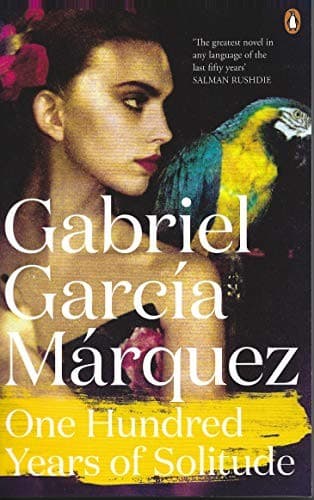
- No. 8One Hundred Years of SolitudeGabriel Garcia Marquez
García Márquez follows seven generations of the Buendía family in Macondo, weaving the supernatural into the everyday until one becomes indistinguishable from the other, in the most cited work of Latin American magical realism. It's on this list for being, among the collection's titles, the one that most expands the geographic reach and the literary tradition represented in this selection, beyond the Anglo-American axis that dominates much of it.
Recommended by Chimamanda Ngozi Adichie, Fernando Haddad and 4 other people.
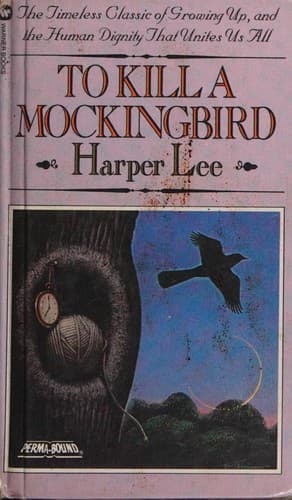
- No. 9To Kill a MockingbirdHarper Lee
Lee narrates the trial of Tom Robinson through the eyes of Scout, a child who only gradually understands the racial injustice she witnesses around her, in a novel that deals with prejudice and civic courage without ever sounding preachy. It's on this list as one of the few titles in the collection that directly addresses structural racism through fiction, broadening the thematic spectrum of the selection beyond the European classics and the more abstract fables.
Recommended by James Clear, Jordan Peterson and 3 other people.
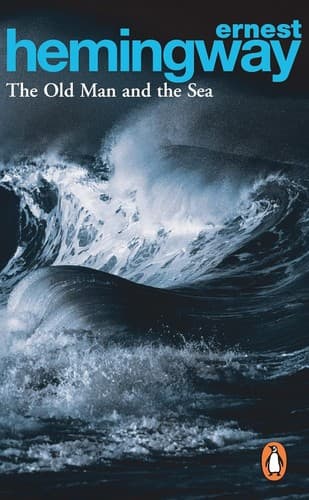
- No. 10The Old Man and the SeaErnest Hemingway
Hemingway reduces an entire lifetime of fishing to a single battle between Santiago and a giant marlin, using short sentences to describe a resilience that doesn't depend on victory to have meaning. It's on this list as the most economical text in the selection — few pages, no subplots — a direct counterpoint to the longer, more populous novels gathered here.
Recommended by Jack Dorsey, Jordan Peterson and 3 other people.
- No. 11American MarriageTayari Jones
Jones follows Roy and Celestine after an unjust conviction interrupts their marriage, treating incarceration not as an abstract political backdrop but as something that erodes intimate decisions day after day. It's on this list as the most contemporary title in the selection, bringing to the collection recent fiction about racial justice and relationships that speaks directly to the older classics gathered here.
Recommended by Barack Obama, Bill Gates and 2 other people.
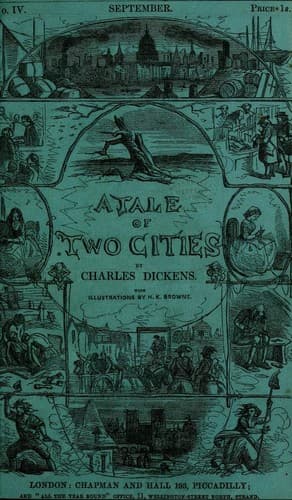
- No. 12Tale of Two Cities by Charles DickensCharles Dickens
Dickens sets in London and Paris, during the French Revolution, a plot of personal sacrifice that culminates in the novel's most quoted gesture, when Sydney Carton trades his own fate for another man's. It closes this list as one of the foundational texts of the Western historical novel, pointing to a literary tradition that runs, in different ways, through almost every other title gathered here.
Recommended by Jk Rowling, Mahatma Gandhi and 2 other people.
Each book's position reflects both how often a publishable recommendation recurs and Cabeceira's own editorial review, described in the methodology above — it is not an automatic scoreboard or an internet consensus. Use each book's links to check who recommends it and the original or secondary source behind each mention before deciding what to read.
Edited by Adam Reis, founder and editorial lead at Cabeceira. Revised Jul 2026. Found a problem, or think a book belongs on this list? Send an editorial suggestion.