Best political books
The books on politics, power and society most recommended by people catalogued by Cabeceira, brought together to represent the ideological range of the collection — from classical liberalism to socialist critique of the market, including classics of the critique of totalitarianism.
This list brings together the books on politics, power and social organization that appear most frequently among the recommendations of people already catalogued by Cabeceira — from a treatise written five hundred years ago on the nature of power to contemporary essays on nationalism, technology and racial inequality. It deliberately covers broad ground: critiques of totalitarianism, liberal theory, political economy in the socialist tradition, the psychology of mass movements and geopolitical realism all appear side by side in this selection, because that is what the recommendations catalogued by the collection, taken together, actually reveal about what these people read when they read about politics.
An explicit editorial criterion guides the selection: within what Cabeceira's collection supports with verifiable, publishable recommendations, this list seeks to represent the ideological range present in the catalogue — liberalism, socialist critique of the market, critiques of totalitarianism rooted in communism, contemporary progressive thought on race, and a classic that predates all these modern traditions — rather than reflecting a single line of thought. This is not an editorial endorsement of any of the positions defended by the books gathered here: a title's presence on this list means it is read and recommended by influential people catalogued by Cabeceira and that it has editorial relevance within the political tradition it represents, never that Cabeceira agrees with its arguments.
This list started from the set of books in Cabeceira's collection classified under politics, society and related themes — including dystopian fiction and foreign-policy essays when the book's framing is explicitly political — considering only titles with at least two publishable recommendations from distinct people. Within this universe of qualified candidates, the curation did not simply choose the most recommended: the explicit selection criterion was to maximize representation of the ideological range present in the collection — classical liberalism, socialist critique of the market, critiques of totalitarianism rooted in communism, contemporary progressive thought on race, the psychology of mass movements and geopolitical realism — without ever including a title that did not meet the minimum of two publishable recommendations from distinct people. The order combines this criterion of ideological diversity with recommendation frequency as an indication of inclusion: books from related traditions sit side by side (the two George Orwell titles on totalitarianism, for example, or the two titles on racial inequality), and within each thematic grouping, the title with the highest number of eligible recommenders appears first. Presence on this list is not an editorial endorsement of any specific political position: it documents what influential people catalogued by Cabeceira actually recommend, not Cabeceira's assessment of which political tradition is correct. One real and deliberate limitation: the survey for this theme found no clear representative of classical conservatism or right-wing economic liberalism among the candidates reaching the minimum of two publishable recommendations, nor a foundational communist manifesto. Rather than forcing a weak title or one without sufficient recommendations just to fill these gaps, the list acknowledges this absence here and leaves it for a future revision, should Cabeceira's collection come to support sufficient publishable recommendations in these specific traditions. This list also reflects only what is already catalogued by Cabeceira at a given moment, not a complete overview of the political thought of any tradition.
As an Amazon Associate I earn from qualifying purchases. Learn more..
- No. 1Better Angels of Our NatureSteven Pinker
Pinker gathers extensive historical data to argue that human violence has declined over the centuries as reason, science and modern institutions became established — an argument that, within the spectrum this list maps, anchors the tradition of classical liberalism and Enlightenment optimism about institutional progress. It is tied for the broadest base of distinct recommenders among the qualified political books in the collection, which supports its opening position on this list.
Recommended by Anthony Pompliano, Bill Gates and 5 other people.
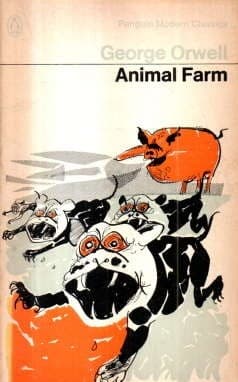
- No. 2Animal FarmGeorge Orwell
Written as an allegory of the Russian Revolution, the work narrates how animals who overthrow their human owners end up reproducing, under new leadership, the same hierarchies they fought against — a pointed critique of the corruption of socialist ideals by centralized power, coming from an author who described himself as a democratic socialist. It's on this list for representing, within the spectrum it maps, an internal critique of the communist/socialist tradition of how revolutionary movements can betray their own principles.
Recommended by Abraham Weintraub, Bruno Perini and 4 other people.
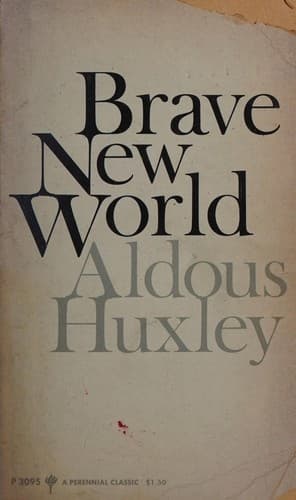
- No. 3Brave New WorldAldous Huxley
Huxley imagines a society stabilized by psychological conditioning and controlled pleasure, not by brute force, proposing a form of domination that dispenses with open violence in exchange for comfort and the absence of friction. It makes this list as a counterpoint to "1984" within the tradition of critique of totalitarianism: while Orwell describes control through fear, Huxley describes control through manufactured consent, broadening the range of forms of power this selection seeks to represent.
Recommended by Jordan Peterson, Sam Altman and 2 other people.
- No. 4The PrinceNiccolò Machiavelli
Machiavelli explicitly separates the conquest and maintenance of power from traditional ethics, proposing a pragmatic reading of government that became a foundational text of Western political theory. It's on this list as a historical anchor predating the modern left and right traditions represented by the other titles, serving as a common starting point for the vocabulary of power that runs through the rest of the selection.
Recommended by Garry Tan, Mário Sergio Cortella and 2 other people.
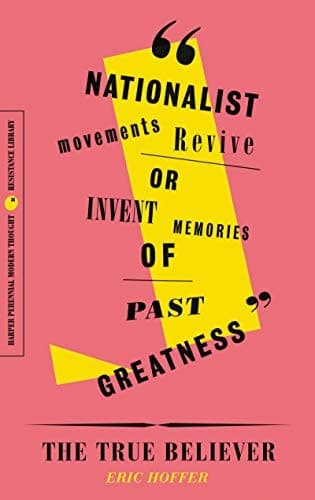
- No. 5The True BelieverEric Hoffer
Hoffer analyzes the psychological mechanisms that lead ordinary people to join mass movements — religious, political or ideological — and to devote themselves to a cause with absolute conviction, treating fanaticism as a pattern that cuts across movements at any extreme of the spectrum and religious fundamentalisms alike. It makes this list for discussing the common mechanism behind radicalization at any point on the political spectrum, complementing the more tradition-specific titles with an account of how any ideology can become dogma.
Recommended by Marc Andreessen, Mark Cuban and 2 other people.
- No. 6The Great trasformationKarl Polanyi
Polanyi argues that the self-regulating market of the nineteenth century was a deliberate historical construction, not a natural state of the economy, and that its uncontrolled expansion tore apart traditional social structures — an argument that has become a reference for left-wing and social-democratic traditions skeptical of unrestricted economic liberalism. It's on this list for representing, within the spectrum it maps, a foundational critique of the deregulated free market, in direct contrast to the more liberal reading of other titles in the selection.
Recommended by Noam Chomsky and Satya Nadella.
- No. 7Between the World and MeTa-Nehisi Coates
Written as a letter to the author's teenage son, the book examines what it means to live in a Black body in the United States, combining personal reflection with an analysis of structural racial injustice. It makes this list for representing, within the spectrum it maps, the contemporary progressive tradition of racial and social critique, a line of political thought distinct from the more classical left and right traditions represented by other titles in the selection.
Recommended by Barack Obama, Bob Iger and 2 other people.
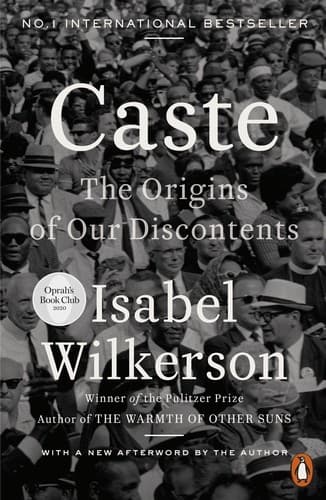
- No. 8CasteIsabel Wilkerson
Wilkerson compares racial inequality in the United States to the caste systems of India and Nazi Germany, proposing that racial hierarchies function as a fixed social structure, not merely as individual prejudice. It complements "Entre o Mundo e Eu" on this list by addressing the same central theme — structural racial inequality — from a different historical and comparative framing, reinforcing this contemporary progressive strand of the spectrum the list seeks to represent.
Recommended by Oprah Winfrey, Ramit Sethi and one other person.
- No. 9Destined for WarGraham Allison
Allison examines sixteen historical episodes in which a rising power challenged an established power, observing that twelve of them ended in war — a realist foreign-policy framing applied to the current dispute between the United States and China. It makes this list for representing the tradition of geopolitical realism, focused on national interest and the balance of power between states, a line of political thought distinct from the more domestic and ideological discussions of the other titles in the selection.
Recommended by Elon Musk, Fareed Zakaria and 2 other people.
- No. 1021 Lessons for the 21st CenturyYuval Noah Harari
Harari gathers essays on technology, nationalism, immigration, religion and meaning, addressing contemporary political anxieties that cut across the ideological spectrum without aligning with any specific tradition. It closes this list by placing the more classical political traditions represented in the other titles against the challenges of the twenty-first century, functioning as a bridge between traditional political thought and the dilemmas of power, identity and control that emerge with new technologies.
Recommended by Bill Gates, Fareed Zakaria and 2 other people.


Each book's position reflects both how often a publishable recommendation recurs and Cabeceira's own editorial review, described in the methodology above — it is not an automatic scoreboard or an internet consensus. Use each book's links to check who recommends it and the original or secondary source behind each mention before deciding what to read.
Edited by Adam Reis, founder and editorial lead at Cabeceira. Revised Jul 2026. Found a problem, or think a book belongs on this list? Send an editorial suggestion.