Best science books
The science books that appear most often among the recommendations catalogued by Cabeceira, selected for recurrence among publishable recommendations and for covering genuinely distinct scientific fields, from cognitive psychology to genetics.
This list brings together the science books — works that explain real scientific findings, methods, or debates to a non-specialist audience — that appear most often in the recommendations of people already catalogued by Cabeceira. It does not attempt to cover all available scientific knowledge: it draws only on what is in Cabeceira's collection and on what real people with traceable recommendations have actually read and recommended.
The books gathered here cover quite different scientific fields — cognitive psychology, applied statistics, behavioral biology, neuroscience, genetics, evolutionary biology, and the future risks of artificial intelligence — and range from a foundational text from 1859 to an ongoing debate about artificial superintelligence. The order combines the frequency of publishable recommendations in the collection with an editorial assessment of how these books, read together, cover complementary areas of science rather than repeating the same argument from different angles.
This list draws on books in Cabeceira's collection classified under the science category, or clearly focused on explaining a real scientific finding, method, or debate to a non-specialist audience. Within this subset, only titles with at least two publishable recommendations from distinct people were included; when two eligible titles covered very similar scientific ground (for example, more than one book on the biological basis of human social behavior), only the one with the higher recurrence made the list, so that the final selection would represent complementary scientific fields rather than repeat the same argument. Each book's position combines the number of publishable recommendations it has in the collection with an editorial assessment of the diversity of scientific fields covered by the selection as a whole. The list is revised whenever new relevant recommendations enter Cabeceira's collection or when a source used by one of the books ceases to be publishable; the date of the most recent revision appears at the top of this page. One real limitation is that this list reflects only what is already catalogued by Cabeceira at a given time, rather than providing a complete overview of the available science communication.
As an Amazon Associate I earn from qualifying purchases. Learn more..
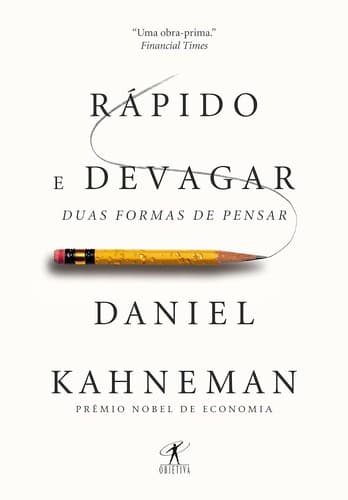
- No. 1Thinking, Fast and SlowDaniel Kahneman
Kahneman, a psychologist and Nobel laureate in economics, describes two systems of human thought — one fast and automatic, the other slow and deliberate — backing his argument with decades of experiments on cognitive biases and systematic errors of judgment. It opens this list as the title with the broadest base of distinct recommenders among the science books in the collection, covering cognitive psychology, the field underlying much of the reasoning about decision-making found in other titles in this selection.
Recommended by Bill Gates, Derek Sivers and 8 other people.
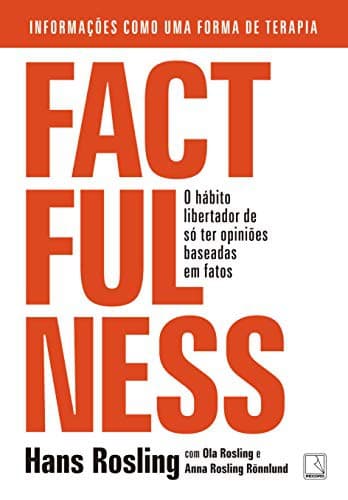
- No. 2FactfulnessHans Rosling
Rosling uses decades of global data on health, education, and income to show that instincts such as fear and dramatization systematically distort how people see the state of the world, even when many indicators are in fact improving. It is included in this list for representing applied statistics as a scientific tool for correcting perception, an approach distinct from Kahneman's cognitive psychology: not how the brain errs when making decisions, but how it errs when interpreting aggregate data.
Recommended by Barack Obama, Bill Gates and 4 other people.
- No. 3Enlightenment NowSteven Pinker
Pinker gathers data on health, wealth, knowledge, and freedom across centuries to argue that Enlightenment values — reason, science, humanism — still produce measurable progress, even amid contemporary pessimism. It is included in this list for addressing the role of the scientific method as a historical force for improvement, complementing Rosling's more statistical focus with a broader argument about reason and evidence as tools of knowledge.
Recommended by Bill Gates, Jordan Peterson and 4 other people.
- No. 4The checklist manifestoAtul Gawande
Gawande, a surgeon, investigates why competent people make basic mistakes in complex environments and how simple checklists — tested in medicine, aviation, and construction — measurably reduce failures. It is included in this list for addressing science applied to processes and error reduction, a domain distinct from individual cognition or biology and closer to how human systems fail and can be corrected.
Recommended by André Valle, Bill Gates and 4 other people.
- No. 5How to Change Your MindMichael Pollan
Pollan investigates the scientific and cultural history of psychedelic substances such as psilocybin and LSD, revisiting decades of suppressed research and recent clinical results on the treatment of depression, anxiety, and post-traumatic stress disorder. It is included in this list for bringing the neuroscience of consciousness to the selection, a field that no other title gathered here addresses directly.
Recommended by Michael Mauboussin, Naval Ravikant and 3 other people.
- No. 6BehaveRobert M. Sapolsky
Sapolsky integrates neuroscience, primatology, psychology, and history to explain the biological bases of human behavior, from its noblest to its most disturbing acts, questioning conventional notions of responsibility and free will. It makes this list for addressing social behavior from the biology of the brain, complementing the more statistical and historical focus of other titles in the selection with a mechanistic explanation.
Recommended by Eslen Delanogare, Marc Andreessen and 2 other people.
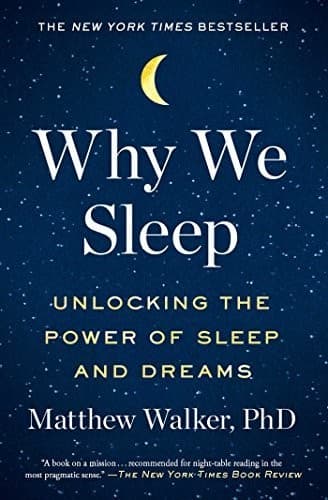
- No. 7Why We SleepMatthew Walker
Walker explains the neurobiological mechanisms of sleep and why sleep deprivation compromises memory, creativity, cardiovascular health, and the immune system, dispelling common myths about the need for little sleep to be productive. It is on this list as the selection's only work centered entirely on a specific, everyday biological process, with direct and measurable practical implications.
Recommended by Bill Gates, Eslen Delanogare and 2 other people.
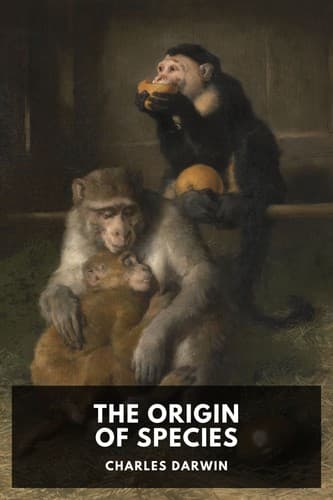
- No. 8The Origin of SpeciesCharles Darwin
Darwin's 1859 text presents, through meticulous observation and systematic reasoning, the theory of evolution by natural selection — the foundational text underlying much of modern biology, including the evolutionary arguments of other books in this selection. It makes this list as the selection's only 19th-century primary source, the historical starting point for the debate on evolution that Dawkins takes up further along in this same list.
Recommended by Eslen Delanogare, Neil Degrasse Tyson and one other person.
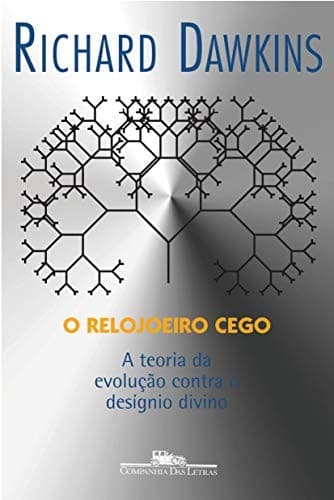
- No. 9Blind WatchmakerRichard Dawkins
Dawkins defends the theory of evolution by natural selection against arguments for intelligent design, using the metaphor of a "blind watchmaker" to show how the apparent complexity of nature arises from cumulative, purposeless processes rather than from a designer. It is on this list for explicitly updating and defending, more than a century later, the mechanisms Darwin proposed in the selection's first title, serving as the direct scientific response to the most common objections to the theory.
Recommended by Charlie Munger, Jeff Bezos and one other person.
- No. 10Who We Are and How We Got HereDavid Reich
Reich, a geneticist, uses ancient DNA and population genetics to reconstruct human migrations and genetic mixing over tens of thousands of years, also addressing the delicate implications of this research for notions of race and difference. It makes this list for bringing molecular genetics applied to human origins, a scientific method no other title in the selection uses, even while addressing a theme — the origins of the species — related to Darwin's and Dawkins's.
Recommended by Marc Andreessen, Michael Mauboussin and 2 other people.
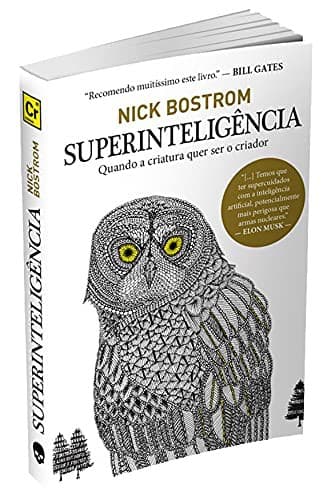
- No. 11SuperintelligenceNick Bostrom
Bostrom systematically examines technical paths toward developing artificial intelligence superior to human intelligence, the associated existential risks, and strategies to ensure that such development happens safely. It closes this list as the only title focused on the future of science rather than what has already been discovered, serving as a speculative counterpoint to the other books in this selection, all grounded in already-completed research.
Recommended by Elon Musk, Naval Ravikant and 2 other people.

Each book's position reflects both how often a publishable recommendation recurs and Cabeceira's own editorial review, described in the methodology above — it is not an automatic scoreboard or an internet consensus. Use each book's links to check who recommends it and the original or secondary source behind each mention before deciding what to read.
Edited by Adam Reis, founder and editorial lead at Cabeceira. Revised Jul 2026. Found a problem, or think a book belongs on this list? Send an editorial suggestion.