Best technology books
The books about building, understanding, and questioning technology that appear most often among founders, executives, and technology thinkers cataloged by Cabeceira, selected by recurrence among publishable recommendations and by their specific relevance to those who build or study technology.
This list brings together the books on technology — in the broad sense of works about how it is built, how it transforms companies and societies, and where it might be taking the human species — that appear most often in the recommendations of founders, executives, and technology thinkers already cataloged by Cabeceira. It doesn't try to answer "what are the most important technology books of all time": it starts only from what is in the Cabeceira collection and from what people with real experience in technology companies or research have actually read and recommended.
The titles gathered here cover different angles of the same theme — innovation theory, biographies of founders and companies that defined an era, the history of software engineering and games, and reflections on where artificial intelligence and other emerging technologies might take society — and so the list doesn't propose a single thesis about technology, but a panorama of how people who build or study technology think about building, risk, and the future. The order combines the frequency of publishable recommendation in the collection with an editorial reading of each book's specific relevance to understanding technology — not business in general —, which means it may diverge from a ranking based purely on raw mention count.
This list started from the books in the Cabeceira collection classified under the technology category, or clearly related to building technology companies, innovation, software engineering, artificial intelligence, or the social impact of emerging technologies. Within that subset, only titles with at least two publishable recommendations from distinct people were included; when the same author had more than one eligible title — as with Yuval Noah Harari, with "Homo Deus" and "21 Lessons for the 21st Century" among the candidates —, only the most recommended title, and the one most directly about the future of technology, made the list, so that a single author wouldn't occupy more than one spot in a selection designed to cover different angles of the theme. Each book's position combines the number of eligible recommenders with an editorial review of its specific relevance to understanding technology — product and company building, innovation theory, biography of those who built companies that defined an era, or reflection on the future of artificial intelligence —, such that frequency is an entry signal and not the sole ranking criterion, and so the final order may diverge from a purely count-based ranking. The list is revised whenever new relevant recommendations enter the Cabeceira collection; the date at the top of this page reflects the most recent editorial revision. One real limitation: this list reflects only what is already cataloged by Cabeceira at a given moment, not the complete universe of what these people have ever publicly recommended about technology anywhere.
As an Amazon Associate I earn from qualifying purchases. Learn more..
- No. 1Homo DeusYuval Noah Harari
Harari projects where artificial intelligence, genetic editing, and the accumulation of data might take the human species, directly questioning concepts such as free will and consciousness as algorithms gain decision-making power over people's lives. It opens this list by being, among the collection's books most directly about the future of technology, the one with the broadest base of distinct recommenders, including a reading from Bill Gates, who described the work as "a thoughtful reflection on what might be in store for humanity."
Recommended by Bill Gates, Eslen Delanogare and 4 other people.
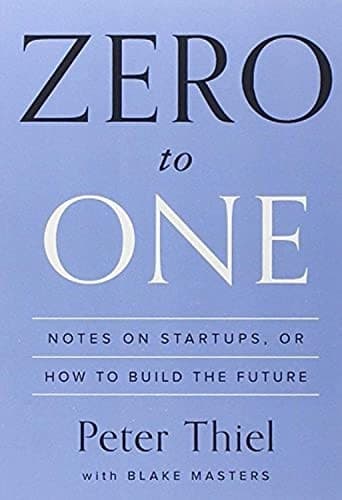
- No. 2Zero to OnePeter Thiel
Thiel argues that real technological progress doesn't come from competing within already-defined markets, but from creating something that doesn't yet exist — a distinction that has become common vocabulary among technology company founders. It makes this list because few books in the collection have a recommender base so concentrated among actual builders of technology companies, as Marc Andreessen summarizes: "the first book every practicing or aspiring entrepreneur should read."
Recommended by Andrew Ng, Ben Horowitz and 6 other people.
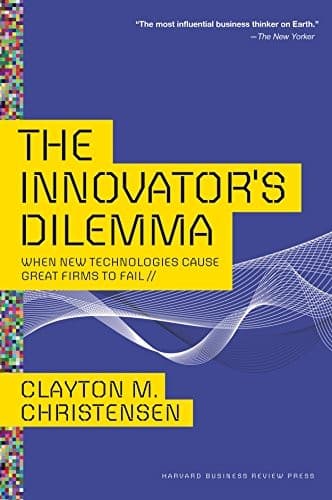
- No. 3The Innovator's DilemmaClayton M. Christensen
Christensen explains why well-run technology companies, following every management best practice, still lose entire markets to technologies that initially seemed simple or inferior — the mechanism he named the innovator's dilemma. It's on this list because it precisely identifies a structural risk specific to the technology industry, cited by founders such as Drew Houston of Dropbox and Marc Andreessen among its recommenders.
Recommended by André Valle, Ben Horowitz and 7 other people.
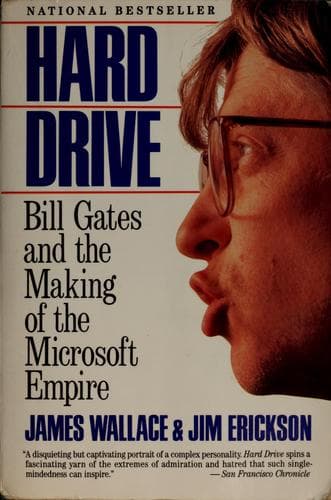
- No. 4Hard driveJames Wallace
Wallace reconstructs Microsoft's early years and Bill Gates's rise from an obsessive programmer to the leader of one of the companies that defined the personal software revolution. It makes this list for its factual detail on how software was written and sold in the industry's early years, as Charlie Munger sums up: the book "really conveys what it took to write and sell software during the software revolution."
Recommended by Carlos Slim, Charlie Munger and one other person.
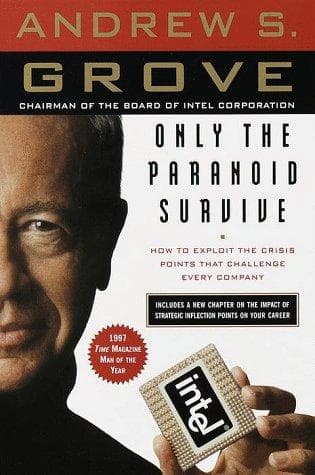
- No. 5Only the Paranoid SurviveAndrew S. Grove
Grove, former CEO of Intel, describes "strategic inflection points" — moments when a market's technological or competitive foundation shifts so fast that only companies paranoid enough to notice the change survive. It makes this list because it identifies, from within the semiconductor industry, the kind of threat any technology company faces when the very technology beneath its feet changes; Marc Andreessen cites it among his favorite reading topics.
Recommended by Ben Horowitz, Bernardinho and 4 other people.
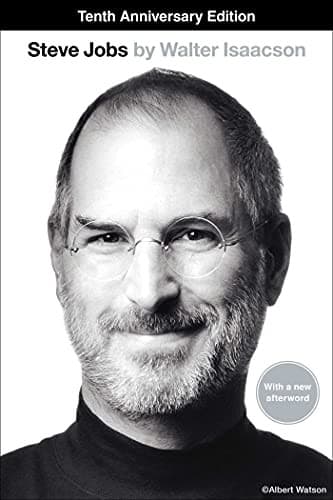
- No. 6Steve JobsWalter Isaacson
Isaacson reconstructs, with direct access to Jobs himself, the contradictions behind Apple's cofounder: an obsession with design and detail alongside a calculated coldness toward the people around him. It's on this list for being the most recommended technology-founder biography in the collection among product builders, including Bill Gates and Elon Musk — two names who competed with and interacted directly with the subject.
Recommended by André Valle, Bill Gates and 4 other people.
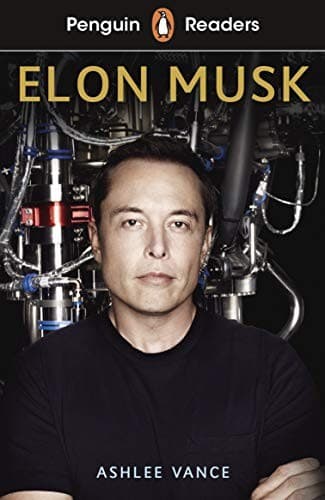
- No. 7Penguin Readers Level 3Ashlee Vance
Vance reconstructs, drawing on direct access and investigative reporting, Musk's trajectory to Tesla and SpaceX, without hiding the setbacks and personal contradictions along the way. It makes this list for being the collection's most recent biography of a technology founder still in active work, recommended by Tim Urban as "a great biography about Musk" and by John Collison, cofounder of Stripe.
Recommended by Anthony Pompliano, John Collison and 2 other people.
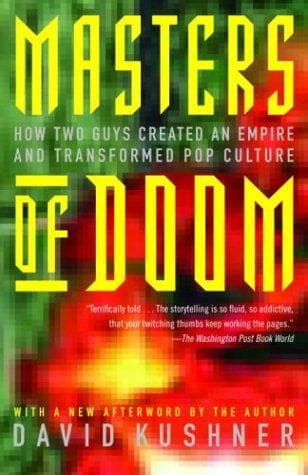
- No. 8Masters of DoomDavid Kushner
Kushner recounts how John Carmack and John Romero, working from within id Software, created Doom and changed the way the gaming industry — and much of recreational software engineering — thought about technology and creation. It makes this list as a counterpoint to the selection's more corporate titles: Patrick Collison, cofounder of Stripe, describes it as "one of my favorite books about building software."
Recommended by Elon Musk, Patrick Collison and one other person.
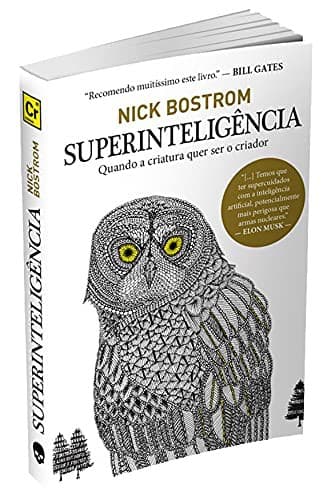
- No. 9SuperintelligenceNick Bostrom
Bostrom systematically analyzes the technical paths that could lead to artificial intelligence superior to human intelligence and the risks that scenario raises, treating the problem with academic rigor rather than loose speculation. It's on this list for being the collection's reference work on the long-term risk of artificial intelligence, recommended by Sam Altman, now leading OpenAI, as "the best thing I've seen on this topic."
Recommended by Elon Musk, Naval Ravikant and 2 other people.
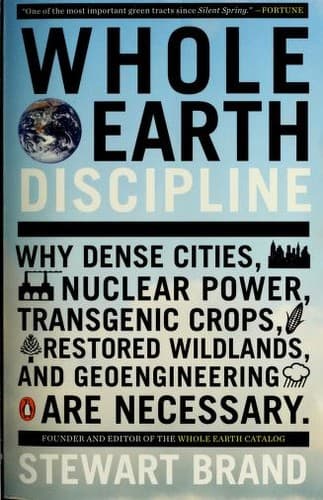
- No. 10Whole earth disciplineStewart Brand
Brand argues that technology, nuclear energy, dense cities, and genetic engineering can reduce human pressure on the planet, rather than embracing the environmental romanticism that rejects these tools on principle. It makes this list for explicitly bringing the tension between technology and the environment into the selection; Marc Andreessen sums it up as a case for why "even environmentalists should support building, cities, nuclear energy, and genetic engineering."
Recommended by Jack Dorsey, Marc Andreessen and 2 other people.
- No. 11The Rise and Fall of American GrowthRobert J. Gordon
Gordon challenges a common belief in the tech world — that current innovation is accelerating human progress as much as electricity, the automobile, and aviation did throughout the 20th century — and backs that skepticism with more than a century of American economic data. It closes this list as a counterpoint to the selection's more optimistic readings on the transformative power of technology; Marc Andreessen, who disagrees with the book's central argument, still recommends it as "a very well-written book," and Bill Gates said he found "the historical analysis, which makes up most of the book, absolutely fascinating" — even as Satya Nadella, CEO of Microsoft, reaches the more optimistic conclusion that "innovation is the ultimate source of dramatic improvements in the human condition."
Recommended by Bill Gates, Marc Andreessen and 2 other people.
Each book's position reflects both how often a publishable recommendation recurs and Cabeceira's own editorial review, described in the methodology above — it is not an automatic scoreboard or an internet consensus. Use each book's links to check who recommends it and the original or secondary source behind each mention before deciding what to read.
Edited by Adam Reis, founder and editorial lead at Cabeceira. Revised Jul 2026. Found a problem, or think a book belongs on this list? Send an editorial suggestion.